


If you’ve ever been told to check your dog’s gums and weren’t quite sure why, this article will make it very clear. Gum color is one of the fastest, most reliable ways to assess whether something is seriously wrong with your dog. It’s something every dog owner should know how to do.
Pale, white, gray, or blue gums are almost always a sign of a medical emergency. Here’s what each color can mean, what’s happening inside the body, and what you need to do.
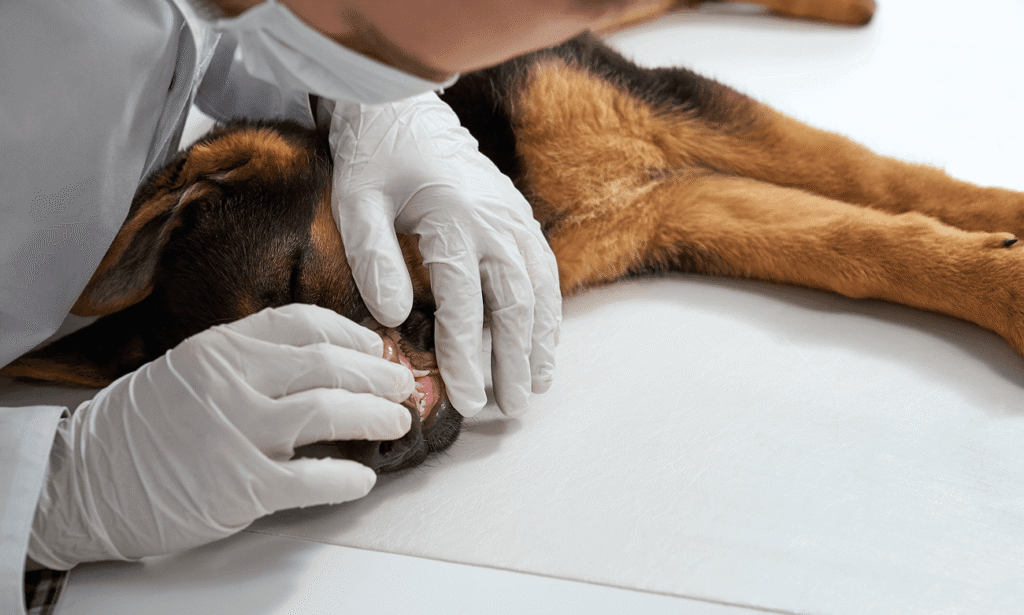
What Do Healthy Dog Gums Look Like?
Healthy dog gums should be bubble-gum pink, moist, and slick to the touch. When you press your finger firmly on the gum and release, the color should return in under 2 seconds. This is called capillary refill time, or CRT, and it reflects how well blood is circulating.
To check: gently lift your dog’s upper lip and look at the gum tissue just above the upper canine teeth. It’s the most accessible spot.
What Each Gum Color Can Mean
Pale Pink, White, or Gray Gums
These colors signal that not enough oxygenated blood is reaching the tissues. Common causes include:
- Anemia — from blood loss, immune-mediated destruction of red blood cells, or bone marrow problems
- Shock — from severe dehydration, major blood loss, sepsis, or a serious allergic reaction
- Internal bleeding — including from a ruptured spleen, intestinal hemorrhage, or abdominal trauma
Pale gums combined with weakness, lethargy, or collapse = emergency. Get to urgent care immediately.
Blue or Purple Gums
Blue gums (called cyanosis) mean the tissues aren’t receiving enough oxygen. This is one of the most serious physical signs in veterinary medicine. Possible causes:
- Respiratory failure or airway obstruction
- Heart failure
- Severe pneumonia or pulmonary edema
- Toxin ingestion affects the blood’s ability to carry oxygen
- Choking or foreign body obstruction
Blue gums are a true emergency. Get in the car now.
Bright Red Gums
Very red gums can indicate heatstroke, early sepsis, or carbon monoxide exposure. Combined with heavy panting and an elevated body temperature, this is an emergency.
Yellow Gums
Yellow-tinged gums (jaundice) can point to liver disease, immune-mediated hemolytic anemia, or leptospirosis. Typically develops over a couple of days, but if you notice it you should go to the veterinarian immediately.
How to Check Capillary Refill Time
Press your finger firmly on the gum just above the upper teeth, hold for 2 seconds, then release. Count how quickly the color returns:
- Under 2 seconds: normal
- 2-3 seconds: concerning
- Over 3 seconds: concerning and seek care ASAP
- Color barely returns or doesn’t return: emergency
Common Causes We See at Urgent Care
- Internal Bleeding
Pale gums following trauma (a car accident, significant fall, or animal attack) can mean internal bleeding. A dog can appear outwardly fine while bleeding internally. If your dog experienced any significant impact and their gums look pale, don’t wait.
- Splenic Masses and Rupture
Hemangiosarcoma of the spleen is unfortunately common in certain breeds: German Shepherds, Golden Retrievers, and Labrador Retrievers are at higher risk. These tumors can rupture suddenly and cause rapid, severe internal blood loss. Often, the first visible sign is sudden collapse with pale or white gums, with no prior warning.
- Immune-Mediated Hemolytic Anemia (IMHA)
In this condition, a dog’s immune system attacks its own red blood cells. It can develop over several days or come on suddenly. Pale gums, sometimes with a yellow tinge, are often the first obvious sign owners notice.
- Shock
Shock can follow severe infection (sepsis), major dehydration, a serious allergic reaction, or significant blood loss. Pale gums, a rapid heart rate, and weakness occurring together are classic signs of shock and an emergency.
Frequently Asked Questions
My dog’s gums look lighter than normal, but she seems okay. Should I worry?
Yes, even without dramatic symptoms, pale gums warrant a same-day vet visit. Some dogs maintain reasonable energy levels as anemia develops gradually over days. Don’t wait for them to collapse before acting.
What if gums look normal but my dog still seems wrong?
Normal gum color rules out some causes but not all. If your instincts say something is off, come in. Normal gums don’t mean all is well; they just mean we have fewer immediate clues.
My dog has dark pigment on their gums naturally. How do I check?
Check the conjunctiva — the pink tissue just inside the lower eyelid. It follows the same color rules as gums. You can also look at the skin on the inside of the ear flap.
Can gum color look different after exercise?
Gums may appear slightly deeper pink immediately after vigorous play. That’s normal. What’s never normal, regardless of activity level, is pale, white, gray, or blue gums.
Pale, white, or blue gums are always a medical emergency.
Don’t wait to see if they improve.