


You notice your dog is bleeding: from a paw, a wound you can’t quite see, or an injury from another animal. What do you do first?
The good news: not every bleeding wound is a crisis. The bad news: some genuinely are. Knowing the difference and what to do in those first few minutes can make all the difference.
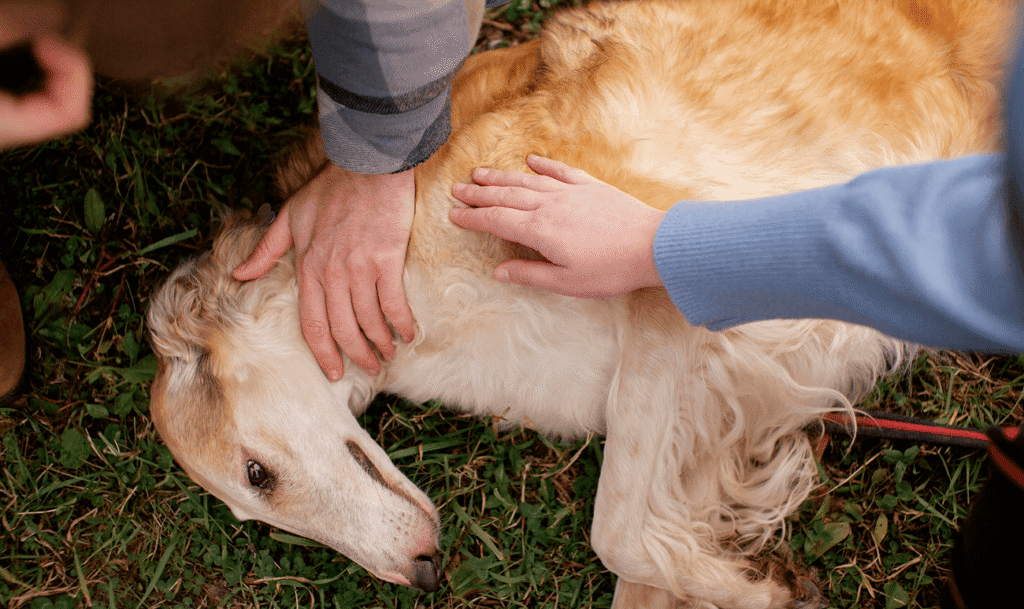
Step 1: Apply Firm, Steady Pressure
For any actively bleeding wound, the first step is always the same: apply firm, steady pressure with a clean cloth, gauze, or a folded shirt.
- Press directly on the wound, don’t lift to check it every few seconds
- Hold continuous pressure for at least 3-5 minutes
- If the cloth soaks through, add more material on top, don’t remove the first layer
- Keep your dog as calm and still as possible
Most minor cuts will stop within 5 minutes of consistent pressure. If it doesn’t, that’s your sign to get to urgent care immediately.
Signs the Bleeding Is Serious
Seek urgent care right away if:
- Bleeding doesn’t slow after 5 minutes of firm pressure
- Blood is bright red and spurting (arterial bleed is very serious)
- The wound is deep, wide, or gaping
- You can see muscle, fat, or bone
- The wound is on the neck, chest, or abdomen
- Your dog is lethargic, weak, or won’t stand
- Gums are pale or white. This signals blood loss, even if the wound looks manageable
- If your dog was bitten by another animal. Puncture wounds are always deeper than they look
Do’s and Don’ts for Bleeding First Aid
Do:
- Stay calm, your dog picks up on your energy
- Use a muzzle; even a calm dog may snap in pain
- Call ahead if you’re heading in so we can prepare
- Wrap the wound with a makeshift bandage, just make sure it is not too tight
Don’t:
- Use a tourniquet unless you’re trained
- Remove an embedded object like a nail, glass, or stick
- Apply hydrogen peroxide or alcohol to clean the wound
- Assume a bite wound is minor just because the opening looks small
- Wait and see if the wound closes on its own
What About Internal Bleeding?
Internal bleeding is scarier because you can’t see it. Suspect it if your dog was hit by a car, kicked, or experienced blunt force trauma, or if they have a distended abdomen, pale gums, rapid breathing, or sudden weakness or collapse.
This is an emergency. Get moving! Do not wait to see if they improve.
When a Small Wound Still Needs a Vet
Some wounds look minor but need professional attention:
- Any bite wound punctures seal over quickly, trapping bacteria inside
- Cuts near or on the eye
- Wounds that are jagged or won’t close with pressure
- Any wound showing signs of infection
- Paw pad cuts. They bleed heavily and are difficult to keep clean, and usually need stitches
Frequently Asked Questions
How much blood loss is dangerous for a dog?
If you’re soaking through cloths quickly or the wound won’t slow, that’s too much — come in.
Should I wrap the wound before coming in?
A light bandage is fine to help maintain pressure, but don’t wrap it too tightly, as it can cut off circulation. Better to apply gentle pressure rather than spending time trying to make it perfect.
My dog was bitten by another dog. The wound looks small. Do I still need a vet?
Yes. Bite wounds are almost always worse than they appear. The canine tooth drives bacteria deep into tissue. They need proper cleaning and assessment, and your dog will likely need antibiotics to prevent serious infection.
If your dog’s bleeding won’t stop or you see pale gums, please call us.
We are open daily from noon to midnight in Pearland, TX.