


A Texas summer road trip with your dog sounds great in theory. In practice, it takes a bit more planning than a fall weekend getaway. The heat and humidity that define Houston summers don’t stop being dangerous just because you’re moving.
Here’s what to think through before you and your pet hit the road.
The Car Is Your Biggest Risk Factor
The interior of a parked car in a Texas summer can reach 130-150 degrees F within minutes, even with windows cracked. Even a 10-minute stop can be fatal.
The rule is simple: if your pet can’t come with you into a building, they shouldn’t be left in the car while it’s parked.
While driving:
- Pre-cool the car before loading your pet, and get the interior temperature down first
- Use window sunshades to reduce solar heat load
- Never leave your pet unattended with the engine off
- Watch for panting that doesn’t settle once the AC kicks in
Pet Hydration on the Road
Hydration is key for road trips and is often forgotten.
- Offer water every 1-2 hours during travel, not just at rest stops
- Bring a travel water bottle and a collapsible bowl
- Pack more water than you think you’ll need
- Avoid large meals right before travel; a full stomach plus heat is a recipe for GI problems
Signs of dehydration to watch for: dry or sticky gums, sunken eyes, lethargy, or skin that doesn’t spring back when gently pinched.
Rest Stop Safety
Rest stops and gas stations come with hazards: hot asphalt, dropped food, motor oil puddles, and other animals. A few habits that help:
- Always leash your dog before opening the car door
- Test the pavement temperature with your hand before walking on it
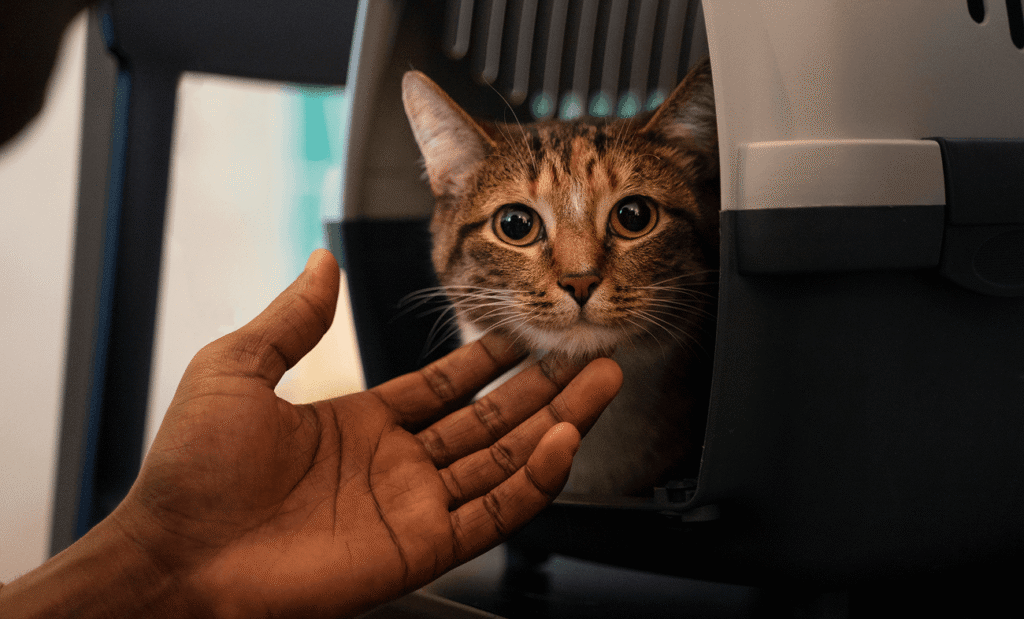
- Keep cats in a secure carrier for the entire trip. Stress and open car doors are a dangerous combination
- Watch what your dog sniffs and tries to eat
- Avoid rest stops between 11 a.m. and 4 p.m. when pavement temperatures peak
Know Your Nearest Vet Along the Route
Before you leave home, take 5 minutes to identify urgent care and emergency clinics along your route. You probably won’t need one, but if you do, you don’t want to be searching while your pet is in distress. Screenshot a few locations so you have them available offline.
Signs Your Pet Is Struggling With the Heat
- Heavy, labored panting that doesn’t slow when cooled
- Excessive drooling
- Vomiting in the car or at stops
- Bright red gums
- Weakness, staggering, or refusal to walk
- Loss of interest in water
If you see these: get to shade or air conditioning immediately, offer small amounts of cool water, and apply cool (not ice-cold) wet cloths to the belly and paws. Then find the nearest urgent vet.
A Note on Cats and Car Travel
Cats handle car travel differently. Many are highly stressed by it, and that stress itself can cause panting, drooling, GI upset, and other symptoms that can look like heat illness but have a different cause.
- Use a well-ventilated, familiar carrier lined with something that smells like home
- Ask your vet in advance about anxiety medication options for long trips
- Check on your cat frequently, stressed cats often won’t vocalize distress clearly
Frequently Asked Questions
Can I travel with my pet in the back cargo area of an SUV?
An open cargo area is fine as long as the AC reaches back there and your pet is securely contained. Just make sure a pet resting near a hot rear hatch window isn’t getting overheated. Direct sun through glass is intense.
My dog pants the whole car ride. Is that normal?
Some dogs pant from excitement, and it settles within a few minutes. Persistent panting that doesn’t improve with the AC running could be anxiety or early heat stress. If it’s a new behavior or more intense than usual, have it looked at.
Should I bring my pet’s medical records when traveling?
Yes, especially vaccination records. If you need urgent care on the road, having your pet’s history makes things significantly easier. A photo of the records on your phone works fine.
Is it safe to travel long distances with a dog in hot weather?
Yes, with proper preparation. Plan your stops, travel during cooler hours when possible, and never leave your pet alone in a parked car. With those precautions in place, most healthy dogs handle road trips well.
Back from a road trip and your pet isn’t acting right?
Houston Veterinary Walk-in & Urgent Care is here when you get back or call us from the road at 713-481-7605 (12pm–12am daily).